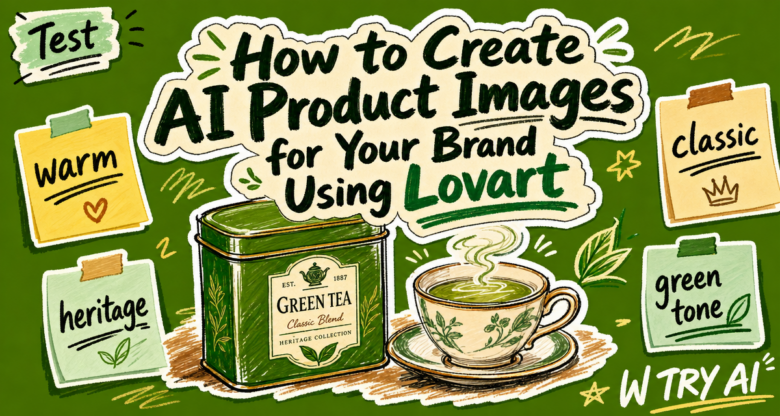
After clarifying brand direction and visual mood, I wanted to test the next question:
Can AI turn a vague brand feeling into a product visual?
In this experiment, I tested Lovart, an AI design tool, to generate an early product image for a virtual tea brand, Wendy Tea.
My goal was not to create an ultimate brand identity, but to see what this vague direction might look like visually.
Lovart Intro
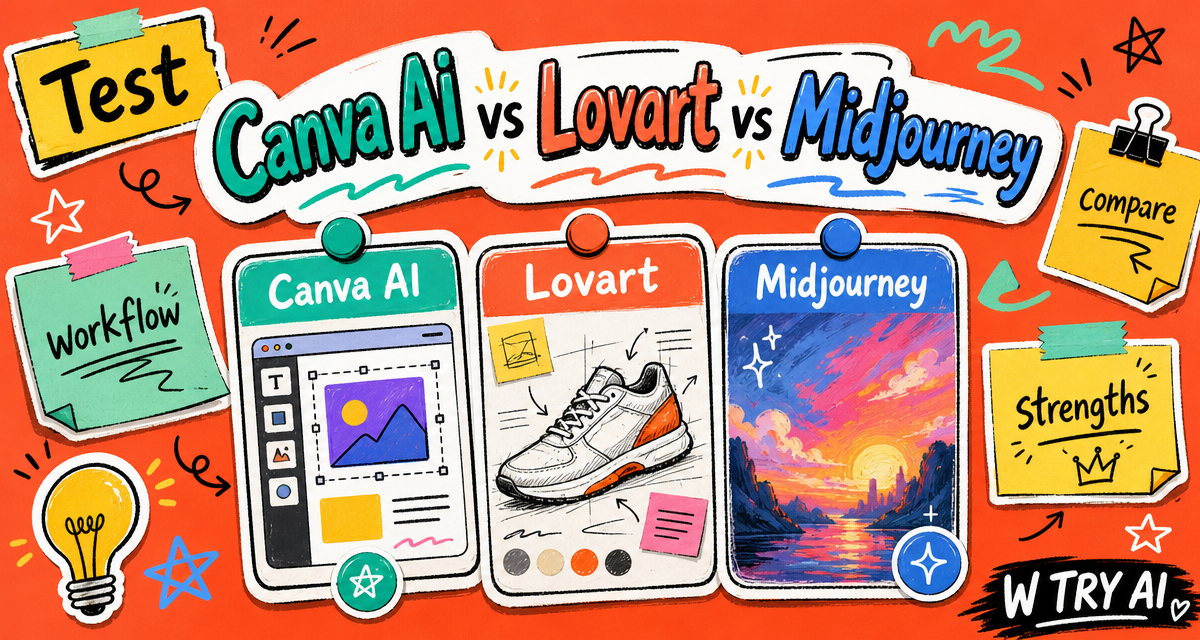
Before diving into the process, let me briefly introduce Lovart!
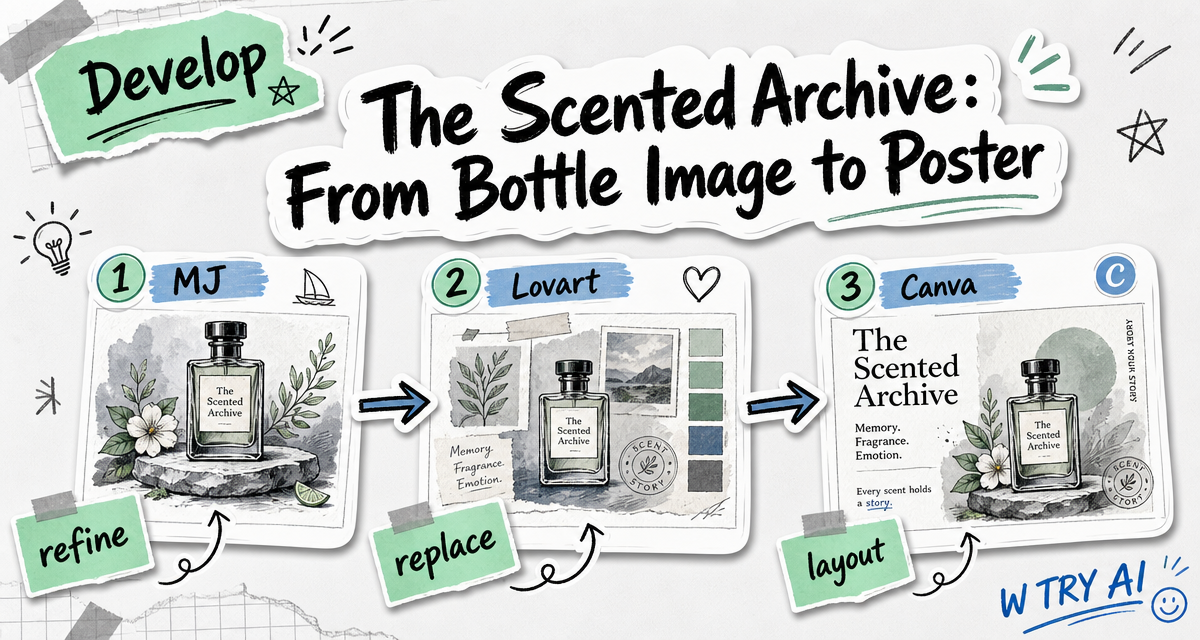
Lovart is different from a typical AI image generator. Instead of simply typing a prompt and getting one picture, it feels more like working with a design assistant. I can describe the feeling, direction, atmosphere, and visual style I want, and Lovart helps turn those ideas into a visual draft.
I had used Lovart before, but this was my first time using it to create a product visual for a fictional brand. So in this post, I wanted to record the full process and see whether Lovart could help me move from a rough brand feeling to something more concrete.
The initial idea
At the beginning, I didn’t have a finished design brief. I only had a vague direction in mind.
The idea was still very fuzzy:
- warm
- classic
- slightly nostalgic
- a touch of “heritage brand”
- green as the main color
It was more like a mood I hoped the visual would carry. So I started by giving Lovart a simple description of the direction.
Create a product image for a fictional tea brand called “Wendy Tea”.

The brand direction is still vague. The mood should reflect:
- warm
- classic
- slightly nostalgic
- a touch of “heritage brand”
- green as the main color

Please include a simple tea product (box or tin) with the label “Wendy Tea” so the brand is visible.
The result
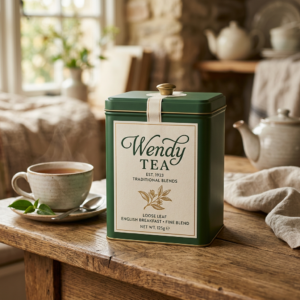
The first result made this vague idea feel more concrete. It captured the warm, classic, and green direction I wanted, but it also looked more complete than I expected.
This was useful because it gave me something to react to. I could see what worked, what felt too polished, and what I might want to adjust in the next version.
Why this kind of image is useful
For a real brand, this type of early AI-generated visual can be helpful because it gives people something concrete to react to.
Instead of only saying “warm, classic, nostalgic, and green,” the image shows what that direction might actually look like.
This can make early communication easier.
A founder, designer, or team can look at the image and discuss what feels right, what feels too strong, and what should change.
What needed improvement
The image still had a few problems.
First, it looked more polished than I expected. It felt less like an early exploration and more like a developed product scene.
The image also had too many elements, including both a tea box and a tea tin. For an early test, focusing on one main product form might make the direction clearer.
The background was warm, but it felt a little too lifestyle-oriented. A cleaner background could help the product stand out more.
Finally, the packaging was clear, but it was not distinctive enough yet. It showed a classic tea brand, but it still needed a stronger brand personality.
For the next version, I would:
- focus on one product form
- make the background cleaner
- reduce lifestyle props
- make the packaging more distinctive
This would make the next version more focused and prevent the brand from looking too finalized too early.
My takeaway
This experiment showed me that Lovart is useful in the early stage of branding because it can turn vague mood words into a visual draft very quickly.
What I liked most about Lovart was that the process felt more stable than a typical AI image generator.
Instead of only generating one random picture, Lovart felt more like a design workspace where I could keep the same direction and refine the details.
Lovart can help create a strong first visual direction, but I still need to decide what works, what feels too polished, and what needs to be adjusted.
Comments
Pingback: AI Brand Lab: My Journey Building Brands with AI
Pingback: W AI Drafts: A Marketing Student Exploring AI Creative Drafts
Pingback: From Prompt to Brand Visual: Trying Midjourney for the First Time