
Operational performance is not only shaped by planning, effort, or execution. It is also shaped by how quickly teams can learn from the work they do every day. In many organizations, people complete tasks, solve problems, and move on to the next responsibility. However, if the results of that work are not reviewed and brought back into the process, the same mistakes can continue and the same delays can appear again. Feedback loops help solve this problem by turning daily work into a source of learning and adjustment. When teams receive clear feedback and use it in a timely way, they can improve processes, strengthen performance, and support more consistent results.
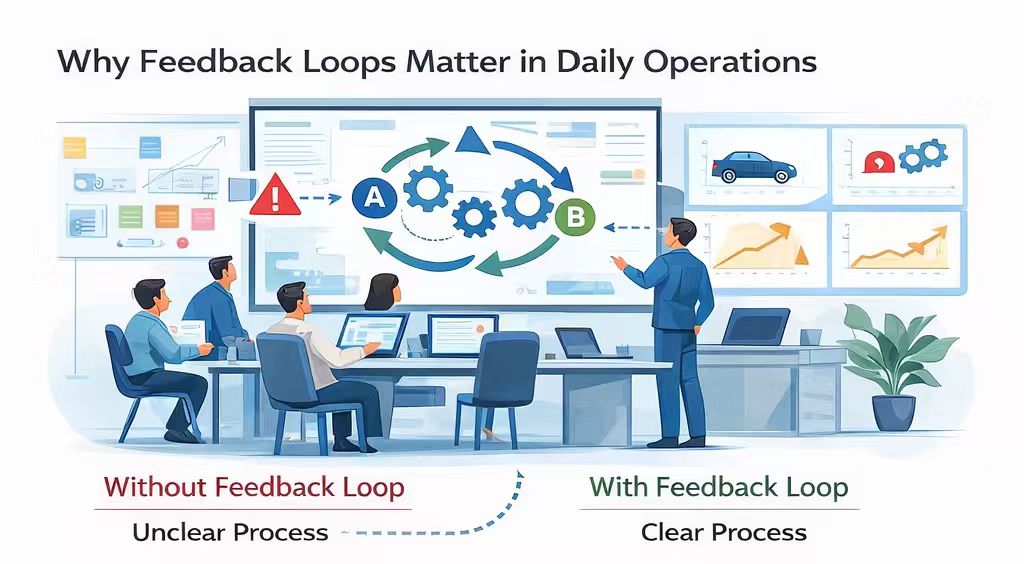
Why Feedback Loops Matter in Daily Operations
Feedback loops matter because they connect action with learning. In daily operations, work moves quickly, and many small decisions are made throughout the day. If teams do not stop to examine outcomes, they may continue following the same habits even when those habits are not producing strong results. This can create repeated errors, slow response times, and weak coordination across departments. In automotive operations, for example, a service team may notice repeated delays in vehicle delivery, but unless that information is reviewed and shared clearly, the root cause may remain unclear. The issue may come from repair scheduling, parts availability, or communication with customers. Without a feedback loop, the team only sees the problem. With a feedback loop, the team can begin to understand why the problem keeps happening.
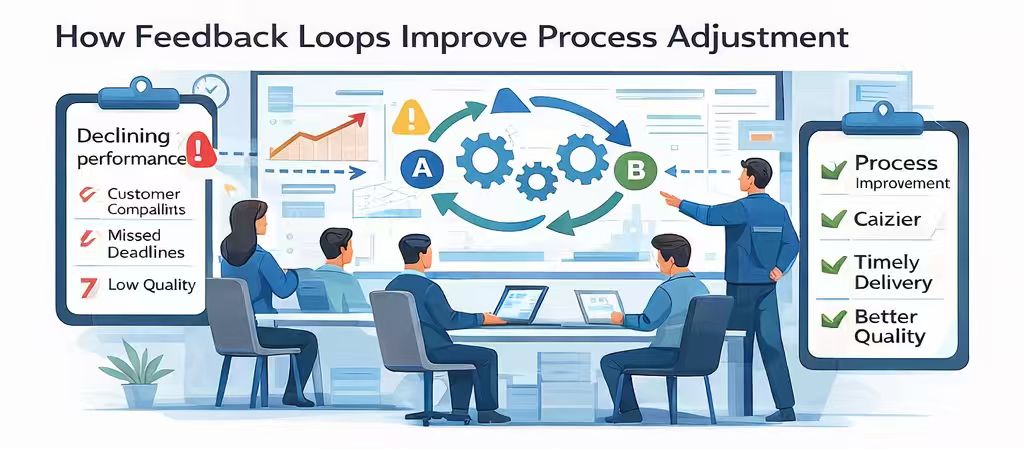
How Feedback Loops Improve Process Adjustment
When feedback loops are strong, processes become easier to adjust and improve. Teams are able to look at results, compare them with expectations, and make changes before problems grow larger. This is important because operational improvement depends on more than effort alone. It depends on the ability to recognize what is working and what is not working. A process may appear stable on the surface, but repeated customer complaints, missed deadlines, or uneven quality may show that improvement is still needed. Feedback loops make these signals easier to notice and use. Instead of reacting only after performance declines, teams can make smaller and faster adjustments during the process itself. This leads to better control, fewer repeated mistakes, and a more responsive operation.

How Feedback Loops Support Better Decisions and Team Learning
Feedback loops also support stronger decisions because they give managers and employees a clearer understanding of real operating conditions. Good decisions depend on more than experience or instinct. They also depend on accurate information from daily work. When teams regularly review results, they can identify patterns that might otherwise remain hidden. For example, a production team may find that one step in the process creates more defects than expected. A service department may notice that customer satisfaction drops when updates are delayed during repairs. Once that feedback becomes visible, leaders can respond with better staffing, clearer communication, or process changes. At the same time, feedback loops support team learning. Employees begin to see how their actions affect the larger system, and this creates a stronger culture of awareness and improvement.
Conclusion
In the end, feedback loops are an important part of strong operational performance because they help organizations learn from action and improve with purpose. They make it easier to identify issues, adjust processes, and support better decisions across the operation. They also help teams move from repetition to learning, which is essential for long term improvement. In modern operations, performance does not improve simply because work is being completed. It improves when the results of that work are reviewed, understood, and used to make the next step better. Organizations that build strong feedback loops into daily operations are often in a better position to improve quality, efficiency, and consistency over time.
Leave a Reply